Camping Tent vs Pop-Up Tent: Which Option Is Best for Bulk Buyers in 2026?
- xinxiangcamping
- Apr 28
- 7 min read
Introduction
The global outdoor recreation industry continues to expand in 2026, driven by rising interest in camping, adventure travel, and weekend getaways. For B2B buyers, wholesalers, and distributors, this growth translates into a critical decision: selecting the right type of camping tent that not only meets customer expectations but also delivers consistent profit margins and low return rates. Among the most debated product categories are traditional camping tents and pop-up tents. While both serve the same fundamental purpose, their structure, pricing, durability, and target audiences differ significantly.
For bulk buyers, this is not just a product comparison—it is a strategic investment decision. Choosing the wrong inventory can lead to slow turnover, higher logistics costs, and increased product returns. This guide provides a detailed, data-driven comparison to help you determine which option aligns best with your business model in 2026.
Camping Tent vs Pop-Up Tent — Quick Overview for Buyers

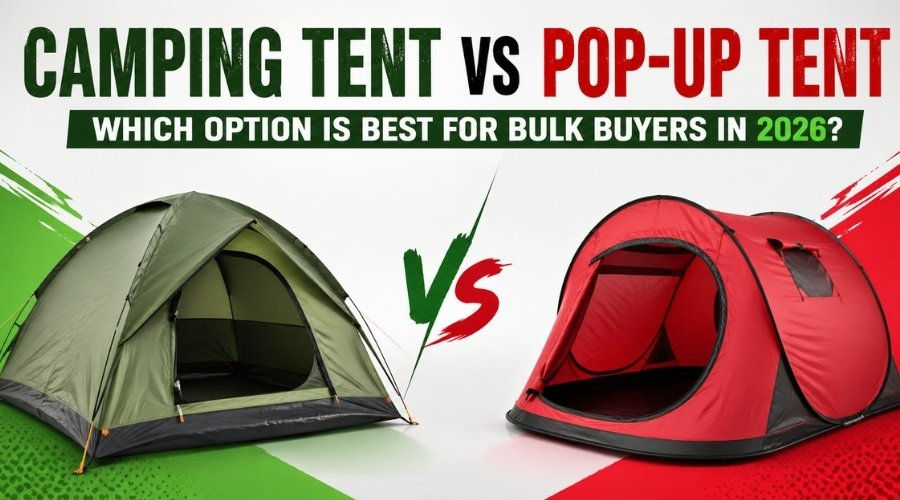
Traditional camping tents are designed with a manual setup process that involves assembling poles, securing stakes, and adjusting fabric layers. These tents are typically more robust and customizable, making them suitable for a wide range of outdoor conditions. On the other hand, pop-up tents are engineered for convenience. They feature pre-attached frames that allow instant setup within seconds, catering to users who prioritize ease of use over technical performance.
From a B2B perspective, the decision revolves around key factors such as cost efficiency, durability, logistics, and target market demand. Camping tents often provide better long-term value, while pop-up tents excel in fast-moving consumer segments.
Market Demand & B2B Trends in 2026
The camping gear market in 2026 reflects two parallel trends. On one side, there is a growing segment of serious outdoor enthusiasts who demand high-performance, durable camping equipment. This segment continues to drive stable demand for traditional camping tents, especially in regions where hiking, trekking, and extended outdoor stays are popular.
On the other side, convenience-driven consumers are shaping a new wave of demand. Pop-up tents have gained traction among casual campers, festival attendees, and first-time buyers who value quick setup and portability. This trend is particularly strong in urban markets and among younger demographics.
For B2B buyers, understanding regional demand patterns is essential. Emerging markets often favor cost-effective traditional tents, while developed markets show higher acceptance of premium-priced pop-up tents. Businesses that align their inventory with these trends are better positioned to capture market share.
Cost Analysis — Which Offers Better Margins?
Cost structure plays a central role in bulk purchasing decisions. Traditional camping tents generally have lower production costs due to simpler mechanical designs. This allows manufacturers to offer competitive pricing, making them ideal for wholesalers targeting price-sensitive markets. Additionally, their flexible pricing tiers enable businesses to cater to both budget and mid-range segments.
Pop-up tents, by contrast, involve more complex engineering due to their automatic frame mechanisms. This increases manufacturing costs and, in turn, the wholesale price. While they can be sold at a premium due to their convenience factor, the margin gap is often narrower when compared to traditional tents.

From an ROI standpoint, camping tents tend to offer more stable and predictable returns, especially in bulk orders. Pop-up tents can deliver higher per-unit revenue, but they also come with increased risk related to product defects and returns. For B2B buyers focused on scalability and consistent margins, traditional tents often provide a safer investment.
Durability & Material Considerations
Durability is one of the most critical factors influencing customer satisfaction and long-term brand reputation. Traditional camping tents are typically built with sturdy pole systems made from fiberglass or aluminum, combined with high-quality fabric such as polyester or canvas. These components are often replaceable, which extends the product lifecycle and reduces overall ownership costs for end users.
Pop-up tents, while convenient, rely heavily on integrated mechanical frames. These mechanisms are more susceptible to wear and tear, particularly with frequent use or improper handling. Once the frame is damaged, repairs are often impractical, leading to higher return rates and customer dissatisfaction.
For bulk buyers, this difference directly impacts after-sales performance. Lower durability often translates into increased warranty claims and logistical challenges. Businesses that prioritize long-term reliability tend to favor traditional camping tents for this reason.
Ease of Use vs Customer Expectations
Ease of use is where pop-up tents clearly outperform traditional models. The ability to set up a tent within seconds is a strong selling point, particularly for beginners and casual users. This convenience often leads to higher initial customer satisfaction and positive first impressions.
However, experienced campers usually prioritize performance over convenience. They are willing to invest time in setup in exchange for better stability, weather resistance, and space optimization. Traditional camping tents cater effectively to this segment.
For B2B buyers, the key is to match product features with customer expectations. Selling pop-up tents to experienced outdoor enthusiasts may result in negative reviews, while offering complex traditional tents to casual users may discourage repeat purchases. Aligning inventory with user behavior is essential for maximizing conversion rates.
Target Market Segmentation
Understanding your target market is fundamental when choosing between camping tents and pop-up tents. Traditional camping tents appeal to adventure travelers, long-stay campers, and professional outdoor users who require durability and adaptability. These customers are often less price-sensitive and more focused on performance.
Pop-up tents, in contrast, are designed for convenience-oriented users. Festival attendees, occasional campers, and families looking for quick solutions form the core customer base. This segment values simplicity and portability, often making purchase decisions based on ease of use rather than technical specifications.
For B2B businesses, segmentation enables more precise inventory planning. A retailer targeting outdoor enthusiasts will benefit from stocking high-quality traditional tents, while a business focused on lifestyle and travel accessories may achieve better results with pop-up tents.
Logistics & Bulk Handling Considerations
Logistics is another crucial factor that directly affects profitability. Traditional camping tents are typically more compact when packed, allowing for efficient storage and lower shipping costs. Their simpler structure also reduces the risk of damage during transportation.
Pop-up tents, due to their pre-assembled frames, often require larger packaging. This increases shipping volume and storage requirements, which can significantly impact logistics expenses in bulk operations. Additionally, their mechanical components are more vulnerable to damage during transit, further increasing risk.
For importers and distributors, these logistical differences can influence overall cost efficiency. Businesses operating on tight margins may find traditional camping tents more practical from a supply chain perspective.
Customization & Private Label Opportunities
Private labeling has become a major growth strategy for B2B buyers in 2026. Traditional camping tents offer extensive customization options, including material selection, size variations, color schemes, and branding elements. This flexibility allows businesses to differentiate their products and build strong brand identities.
Pop-up tents, while still customizable, have limitations due to their structural design. Branding is typically restricted to fabric printing, and design modifications are less flexible. This can limit innovation for businesses aiming to create unique product lines. For companies focused on brand development and long-term growth, traditional camping tents provide a more versatile platform for customization and product differentiation.
Common Buyer Mistakes to Avoid
Many B2B buyers make the mistake of prioritizing low cost over overall value. While cheaper options may reduce initial investment, they often lead to higher return rates and lower customer satisfaction. Another common error is failing to align product selection with target market needs, resulting in poor sales performance. Ignoring supplier quality standards is also a significant risk.
Without proper quality checks, businesses may end up with inconsistent products that damage their reputation. Additionally, overlooking after-sales factors such as warranty support and durability can create long-term operational challenges. Avoiding these mistakes requires a balanced approach that considers cost, quality, and market demand simultaneously.
Which Option Is Best for Your Business?
There is no universal answer to this question, as the best choice depends on your business model and target audience. Traditional camping tents are ideal for buyers who prioritize durability, stable margins, and long-term customer satisfaction. They are particularly well-suited for outdoor retailers and businesses targeting serious campers.
Pop-up tents are better suited for fast-moving markets where convenience and quick sales cycles are key. They work well for lifestyle retailers, travel stores, and businesses catering to casual users.
Many successful B2B buyers adopt a hybrid strategy, stocking both types of tents to cover a broader market. This approach allows businesses to capture multiple customer segments while balancing risk and profitability.
Top Features to Look for When Buying in Bulk
When sourcing camping tents in bulk, certain features should never be overlooked. Waterproof ratings, typically measured through PU coating, are essential for ensuring performance in different weather conditions. Fabric quality, whether polyester or canvas, directly affects durability and user comfort.
Frame materials such as fiberglass and aluminum determine structural strength, while weight and portability influence customer convenience. Certifications and quality standards provide assurance of product reliability and compliance with international requirements.
Focusing on these features helps B2B buyers make informed decisions and maintain consistent product quality across their inventory.
Conclusion
The choice between camping tents and pop-up tents ultimately comes down to aligning product selection with your target market and business objectives. Traditional camping tents offer durability, customization, and stable profit margins, making them a reliable choice for long-term growth. Pop-up tents, on the other hand, provide convenience and fast sales potential, appealing to a different segment of consumers.
In 2026, successful B2B buyers are those who combine market insights with strategic sourcing decisions. By understanding the strengths and limitations of each tent type, businesses can optimize their inventory, reduce risks, and maximize profitability. Instead of viewing this as a simple comparison, it should be treated as a strategic decision that shapes your position in the competitive outdoor gear market.
Frequently Asked Questions (FAQ’s)
Which type of tent has lower return rates in bulk sales?
Traditional camping tents generally have lower return rates because of their simple structure and durable components. Unlike pop-up tents, they do not rely on complex mechanical frames that can easily break or malfunction. This makes them more reliable for long-term use, especially for customers who camp frequently or in rough outdoor conditions.
Are pop-up tents a good option for first-time camping customers?
Yes, pop-up tents are highly suitable for first-time campers due to their quick and effortless setup process. Many beginners prefer convenience over technical performance, which makes pop-up tents an attractive choice. However, B2B buyers should ensure quality standards to avoid issues related to frame durability and product lifespan.
How do I choose the right tent type for my target market?
You should analyze your customer base, usage patterns, and price sensitivity before selecting inventory. If your audience includes serious campers or outdoor professionals, traditional camping tents are a better fit. For casual users, travelers, or festival attendees, pop-up tents tend to perform better due to their ease of use and portability.
What key features should I check before buying camping tents in bulk?
Before placing a bulk order, focus on waterproof ratings, fabric quality, frame material, and overall build durability. Additionally, evaluate packaging size, supplier certifications, and warranty policies. These factors directly impact customer satisfaction, logistics costs, and long-term profitability for your business operations.


Comments